


Are Modular Sofas More Expensive?
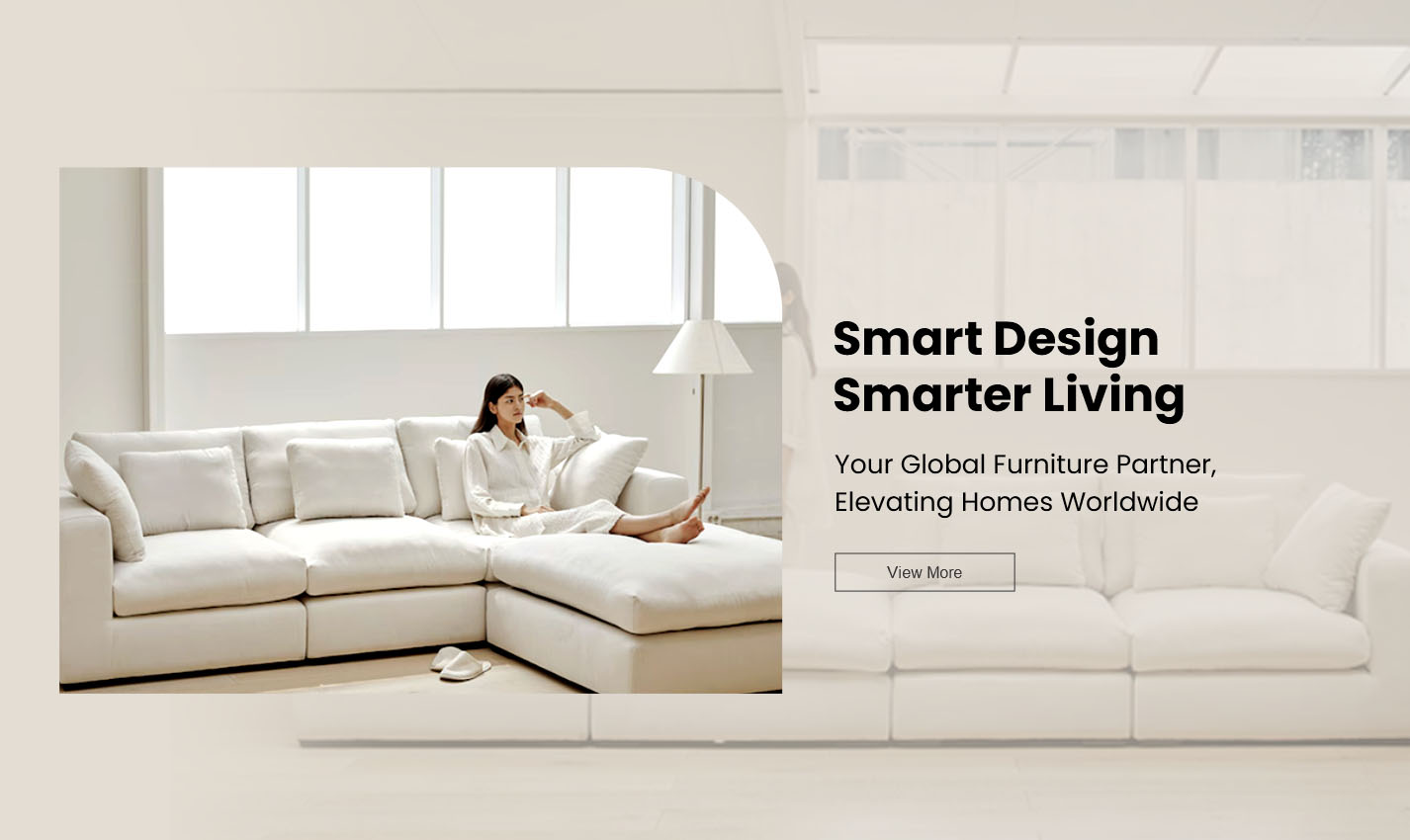
Modular Sofas often look more premium than standard fixed sofas, so the price question comes up early in most sourcing discussions. The short answer is that modular sofas can cost more upfront in many configurations, but they are not automatically more expensive when you compare total value across layout flexibility, replacement strategy, shipping efficiency, and long-term reconfiguration. For commercial spaces, the real evaluation is not only unit price, but cost per usable layout over the product lifecycle.
This article breaks down what drives modular sofa pricing, when the premium is justified, and how to evaluate cost in a way that fits procurement and project planning. View Our Products: HANHAN Modular Sofa.
Pricing Drivers Behind Modular Sofa Cost
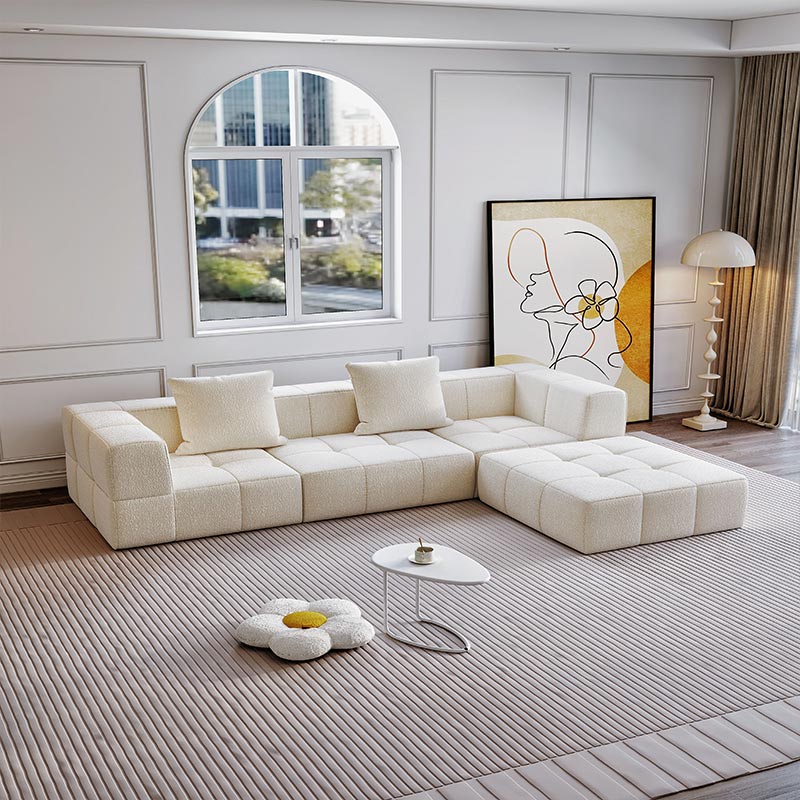
Modular sofas are built as multiple independent units that connect into a finished seating system. That modular architecture introduces several cost factors that may not exist in a single-piece sofa.
First, modular frames and connectors add engineering requirements. Each module must be structurally complete on its own, while also locking securely to adjacent pieces. That usually means reinforced internal framing, standardized connection points, and tighter dimensional control to keep modules aligned.
Second, upholstery work is repeated across more edges and seams. A fixed three-seat sofa has a continuous silhouette, while a modular setup includes more side panels, more corners, and more finished surfaces. More finished faces can translate into higher material use and more labor steps, especially for corner modules and chaise modules.
Third, the value of customization is often built into the system. Modular sofas are frequently designed to support multiple footprints, arm styles, back heights, fabrics, and seating depths without redesigning the entire product from zero. That capability can raise the baseline price compared with a basic fixed sofa that is produced in fewer variations.
Finally, pricing depends on the module mix. A configuration with more corner units, chaise units, or specialty modules typically costs more than a layout built mostly from simple armless seats. Comparing modular to fixed sofas requires comparing equivalent seating capacity and function, not just total item count.
When Modular Sofas Are Not More Expensive In Practice
Even if a modular sofa costs more per seat on a quote, it can reduce overall cost in several practical ways, especially when spaces change frequently or the same product must fit multiple room types.
One advantage is staged purchasing. Instead of committing to one large fixed sofa size, modular systems let you start with a core layout and expand later by adding compatible pieces. That reduces risk when the final floorplan may change, or when a project is rolled out in phases.
Another advantage is partial replacement. In real commercial use, damage and wear do not always affect the entire sofa evenly. With modular seating, a single module can be replaced or refreshed without discarding the full set. Over time, that can materially reduce replacement cost and downtime.
There is also a logistics benefit. Modular units can be easier to move through elevators, narrow corridors, and constrained site access. That can reduce installation complexity and avoid costly delivery failures that happen when oversized fixed sofas cannot be maneuvered into position.
For multi-location procurement, modular consistency is often the biggest hidden value. When one modular sofa model can cover multiple footprints with predictable styling and specifications, procurement teams can simplify vendor lists, reduce sampling cycles, and standardize spare parts planning. That type of repeatability is especially helpful for a project buyer managing rollouts across different sites.
How To Compare Costs Fairly
To decide if modular is truly more expensive, compare the system using a structured checklist. The goal is to compare like-for-like usage, not like-for-like appearance.
Evaluate the following items:
Seating capacity: compare by usable seats, not by module count
Footprint efficiency: compare how much seating you get per square meter
Function: corner lounging, chaise relaxation, or formal upright seating
Maintenance plan: ability to replace parts versus full replacement
Future flexibility: ability to reconfigure for new layouts or tenants
Lead time and packaging: shipment volume and installation constraints
A simple cost comparison table can make decisions clearer.
| Cost Element | Fixed Sofa Cost Pattern | Modular Sofa Cost Pattern | What To Ask During Sourcing |
|---|---|---|---|
| Upfront unit price | Often lower at baseline | Can be higher due to connectors and finished surfaces | Is pricing based on module mix or total seating? |
| Space changes | Requires repurchase for new footprint | Reconfigure with existing modules | Which layouts are supported without custom tooling? |
| Repairs and wear | Whole unit often replaced | Replace only affected modules | Are single modules available as spare units? |
| Logistics | Oversized delivery risk | Easier handling and access | What packaging dimensions apply per module? |
| Long-term refresh | One-time refresh per sofa | Gradual refresh by module | Can upholstery or covers be standardized? |
This approach helps you avoid overpaying for modularity you do not need, while also avoiding underestimating the lifetime cost of fixed furniture in dynamic spaces.
What To Expect From Modular Pricing For Bulk Procurement
For commercial sourcing, modular sofa pricing becomes more favorable as specifications become standardized and quantities increase. The biggest drivers of value in a bulk order are consistency and predictability.
To keep modular costs efficient, standardize these items early:
A limited fabric selection that covers the majority of projects
Standard seat depth and seat height across layouts
A small menu of module types that builds most footprints
A shared color palette that fits multiple interior styles
Standardization reduces complexity in production planning and helps keep costs stable across different configurations. It also improves quality consistency, because the same upholstery patterns and assembly processes are repeated across the order.
If you need customization, modular systems can still be cost-effective when customization is controlled. Instead of changing the structure each time, keep the internal construction consistent and customize the visible elements such as fabric, stitching style, and configuration. That strategy preserves modular compatibility while delivering visual differentiation for different projects.
Conclusion
Modular sofas can be more expensive upfront in many cases, but they are not automatically the higher-cost option when you compare lifecycle value, reconfiguration flexibility, logistics reliability, and partial replacement. The best way to decide is to compare modular and fixed sofas by usable seating, function, and total cost over time rather than by a single per-piece price.
If you want a clear quotation framework for your next project, tell us your target room size, preferred layout shapes, and fabric direction. We can propose configuration options and specifications based on the HANHAN Modular Sofa and provide a practical plan for cost control and scalable purchasing.