


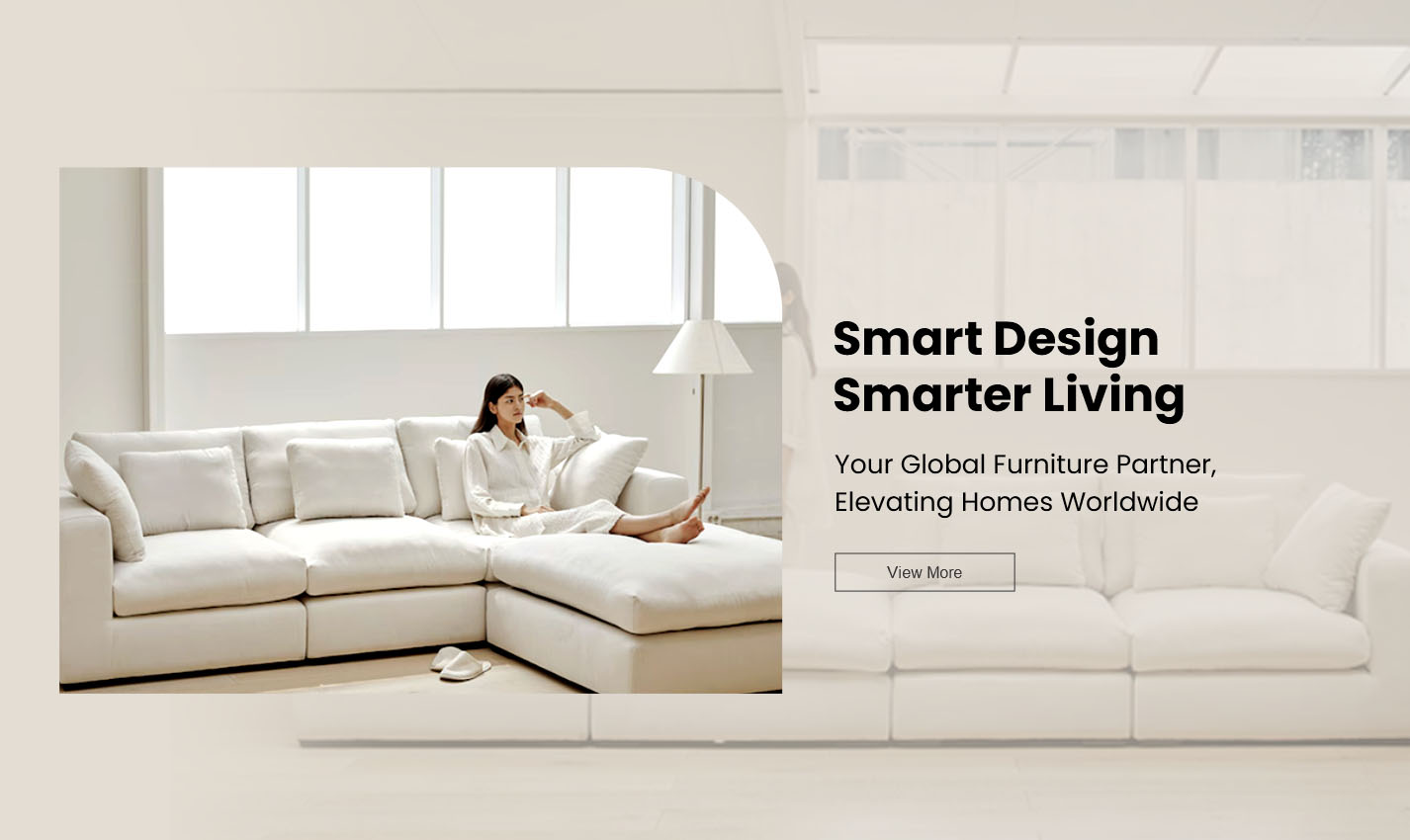
Why Renters Prefer Modular Sofas for Easy Moving?
Renting often means living with change. Lease terms end, roommates move out, job locations shift, and landlords renovate. In many cities, renters relocate more frequently than homeowners, and every move turns furniture into a practical problem. Traditional Sofas are bulky, hard to maneuver in stairwells, and risky to transport without scuffs, torn fabric, or damaged frames. A modular sofa solves many of these issues because it is designed to separate into manageable sections, adapt to different room sizes, and reconfigure without requiring a full replacement.
A well-built modular sofa is not simply a sofa that comes in pieces. It is a seating system with a connection structure, frame stability, and modular planning that allow renters to move, assemble, and rearrange with less stress. The convenience becomes obvious on moving day, but the value continues after the move when the same sofa fits a new layout without feeling like a compromise.
If you want to learn more about modular sofa configurations and options, you can explore our products here: modular sofa
1. Modular Sections Make Stairwells, Elevators, and Doorways Manageable
The biggest challenge renters face with a traditional sofa is physical access. Many rental buildings have narrow staircases, tight turns at landings, and elevators with limited depth. A one-piece couch may be technically the right size for the living room, yet impossible to bring into the apartment without removing doors, scratching walls, or forcing awkward angles that damage corners and upholstery.
A modular sofa changes the moving equation by breaking the total volume into smaller sections. Each module is easier to carry, rotate, and maneuver through tight spaces. This reduces the need for professional movers, lowers the chance of impact damage, and minimizes the time spent on difficult navigation. Instead of treating the sofa as a single object that must fit through every bottleneck, renters move it in stages, one module at a time, with far more control.
2. Frequent Moves Reward Furniture That Can Be Reassembled Quickly
Renters often prioritize furniture that can be assembled and disassembled without complicated tools or specialized skills. Traditional sofas are not designed for repeated transport. Even if they can be moved, they are not built to be repeatedly taken apart, and the stress of lifting a full frame can loosen joints or cause hidden damage.
A modular sofa is more compatible with repeated moves because its design anticipates separation and reconnection. Instead of depending on one large frame, it uses interlocking structures that keep each module stable while still allowing the system to be reconfigured. When modules connect securely, renters can move into a new place and set up seating quickly without spending hours troubleshooting wobble, misalignment, or loose hardware. Over multiple lease cycles, the convenience and reliability become part of the product’s long-term value.
3. Room Size Uncertainty Makes Flexibility More Valuable Than a Fixed Shape
One reason renters hesitate to buy a traditional sofa is that they cannot predict their next living room. A couch that fits perfectly in one apartment can feel oversized in the next, or too small in a larger space. Renters also face layout restrictions such as radiators, support columns, angled walls, and limited wall length, which can make a fixed-shape sofa difficult to place.
Modular sofas solve this problem by allowing renters to scale the seating arrangement to the room. Modules can be added, removed, or rearranged to create different shapes such as an L layout, a straight layout, or a more open configuration that keeps pathways clear. This adaptability is especially useful for renters who change apartments frequently, move between studios and one-bedroom units, or upgrade to larger spaces over time. Instead of replacing the sofa after a move, renters adjust the layout and keep the same product.
4. Modular Layouts Support Multiple Living Styles Without Buying Extra Furniture
Many rental apartments must serve multiple functions in a limited footprint. A living room may also be a home office, a guest space, or a shared lounge for roommates. Renters often need furniture that can adapt to daily changes without creating clutter or requiring extra purchases.
A modular sofa helps create different functional zones. A configuration that works for movie nights can be rearranged to open floor space for workouts, or separated into different seating clusters for social gatherings. Some renters prefer to split modules to create a chair-like seat for reading or to support different roommate preferences. This versatility reduces the need for additional chairs, ottomans, or secondary seating pieces. When the seating system itself can shift with the routine, renters can keep a cleaner space with fewer items.
5. Damage Risk Is Lower When Each Piece Is Smaller and Easier to Protect
Renters face two types of damage risk during moves. The first is damage to the furniture, such as torn upholstery, broken legs, or bent frames. The second is damage to the rental property, such as scratched walls, dented door frames, or scraped elevator panels, which can lead to repair charges.
Modular sofas reduce both risks because each module is easier to wrap, lift, and control. Smaller pieces are less likely to collide with walls, and they can be carried with better posture and fewer sudden shifts. Packaging and protection also become simpler because renters can cover each module individually rather than trying to wrap one oversized couch. In practical terms, the modular approach makes it easier to keep both the furniture and the apartment in good condition during transport.
6. Better Long-Term Cost Efficiency for Renters Who Move Often
Renters often aim to avoid “one-home-only” furniture that becomes unusable after the next move. A traditional sofa is a high-cost purchase that may need replacement if it does not fit the next space, or if it is damaged during a move. Reselling a large sofa is also inconvenient, especially in markets where buyers expect local pickup and low pricing.
A modular sofa tends to retain value better for renters because it stays usable across changing spaces. The ability to reconfigure means fewer replacements over time. Even if a renter decides to upgrade, modular pieces are often easier to transport, store, or sell compared with a one-piece couch. The cost logic is simple: when a product can follow you through multiple apartments and adapt each time, the cost per year of use decreases. For renters who expect several moves over a few years, that stability is a meaningful advantage.
7. Why HANHAN Modular Sofas Fit Renter Priorities
Renters need furniture that can keep up with changing spaces without losing comfort or appearance. HANHAN modular sofas are designed as flexible seating systems rather than fixed sofas, supporting repeat moves and layout changes with a more practical ownership experience.
HANHAN modular sofa advantages include:
Modular flexibility that supports common renter layouts such as straight seating, corner arrangements, and open configurations.
Move-friendly section sizing that makes it easier to carry through narrow doorways and stairwells.
Stable connection design that keeps modules aligned during everyday use and reduces shifting.
Practical long-term usability that supports multiple moves without requiring a full replacement.
Customization also matters for renters who want furniture that fits both the room and their style. Modular sofa systems can support customization through layout planning, module selection, fabric choices, and seating depth preferences. This helps renters build a sofa that feels tailored without creating a “locked-in” setup that only works in one apartment.
If you want to explore configuration options, module combinations, and available styles, you can view our product range here: modular sofa
8. Modular Sofas vs. Traditional Sofas for Renters
| Decision Factor | Modular Sofa | Traditional One-Piece Sofa |
|---|---|---|
| Moving through tight spaces | Easier due to smaller modules | Harder due to bulky frame |
| Setup after moving | Faster reassembly and layout changes | Limited placement options |
| Adaptability to new apartments | High, can reconfigure | Low, fixed shape |
| Damage risk during transport | Lower, easier to protect | Higher, harder to control |
| Long-term ownership value | Higher for frequent movers | Lower if it does not fit future spaces |
| Resale and storage flexibility | Easier to store or sell in parts | Hard to store and resell |
Conclusion
Renters prefer modular sofas because they reduce moving stress, adapt to changing room sizes, and provide flexible living solutions without constant replacement. The practical advantage begins with easier handling through doors and stairwells, but the long-term benefit comes from the ability to reconfigure after every move. When a modular sofa is engineered with stable connections, durable structure, and thoughtful configuration options, it becomes a reliable seating system that follows renters through multiple life stages.
If you want to learn more about layout options and modular configurations designed for flexible living, you can explore our products here: modular sofa